Reading Notes
James Baldwin, “this matter of Atlanta,” and the Architecture of Racism
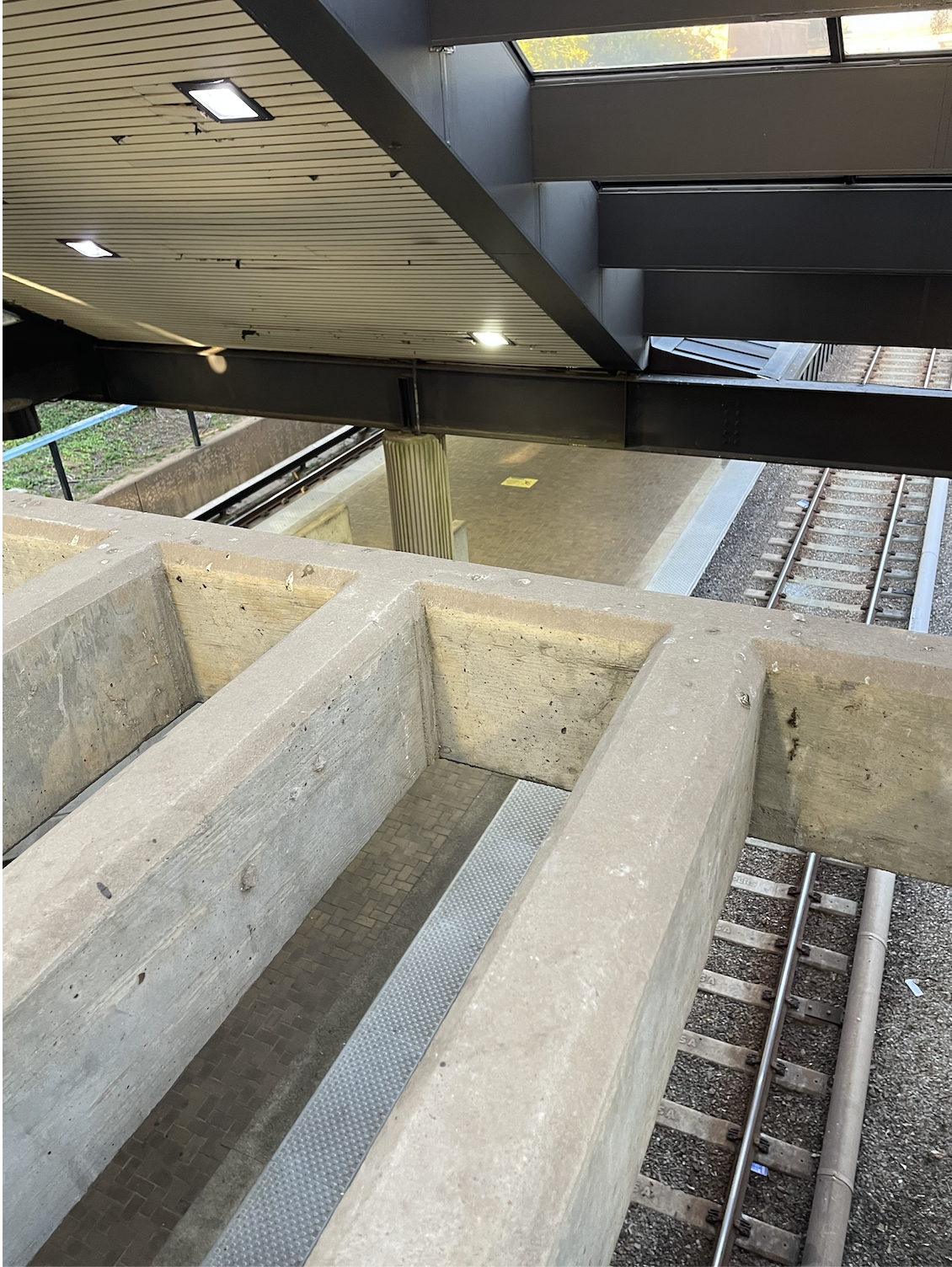
I move back from The Evidence of Things Not Seen and its focus on the aftermath of the case to consider Baldwin’s earlier article, written in the immediacy of his visit to Atlanta in the spring of 1981, and which frames the story of the missing and murdered children within a larger story of Atlanta’s booming urban development in the 1970s. I argue that one key features of the article is Baldwin’s attention to what I am calling the architecture of racism that transformed Atlanta’s urban landscape.
Encountering James Baldwin’s The Evidence of Things Not Seen in Christina Sharpe’s Ordinary Notes
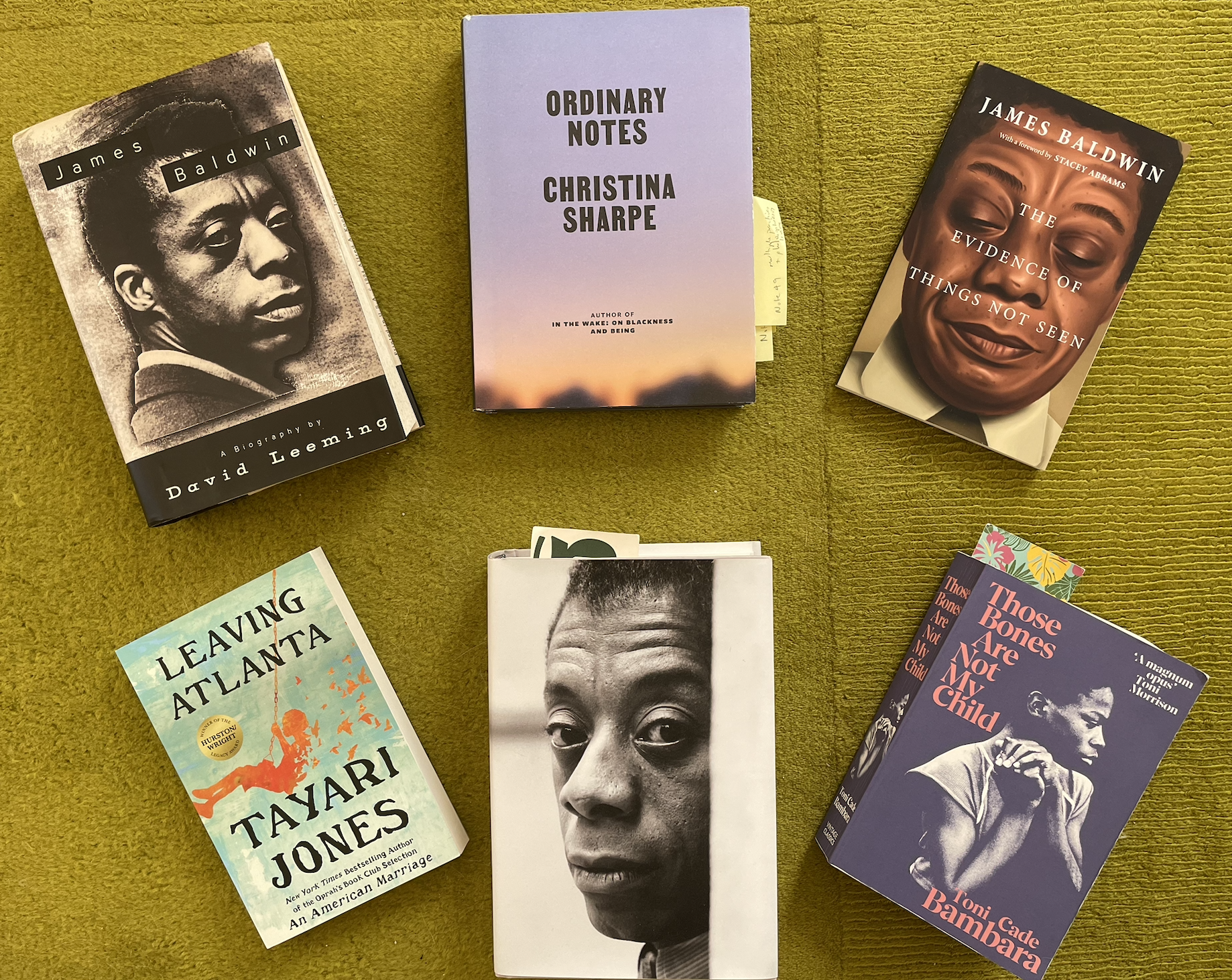
This Reading Notes piece begins with an encounter with an image of a book in another book that has been for me a prompt to more reading. The image of the book is James Baldwin’s The Evidence of Things Not Seen and it is nested in Christina Sharpe’s Ordinary Notes. Here I discuss how this encounter has led me to pursue a reading journey to critically examine the social and political transformations that shaped my hometown of Atlanta in the 1970s.
Urvashi Vaid’s vision of the ongoingness of politics
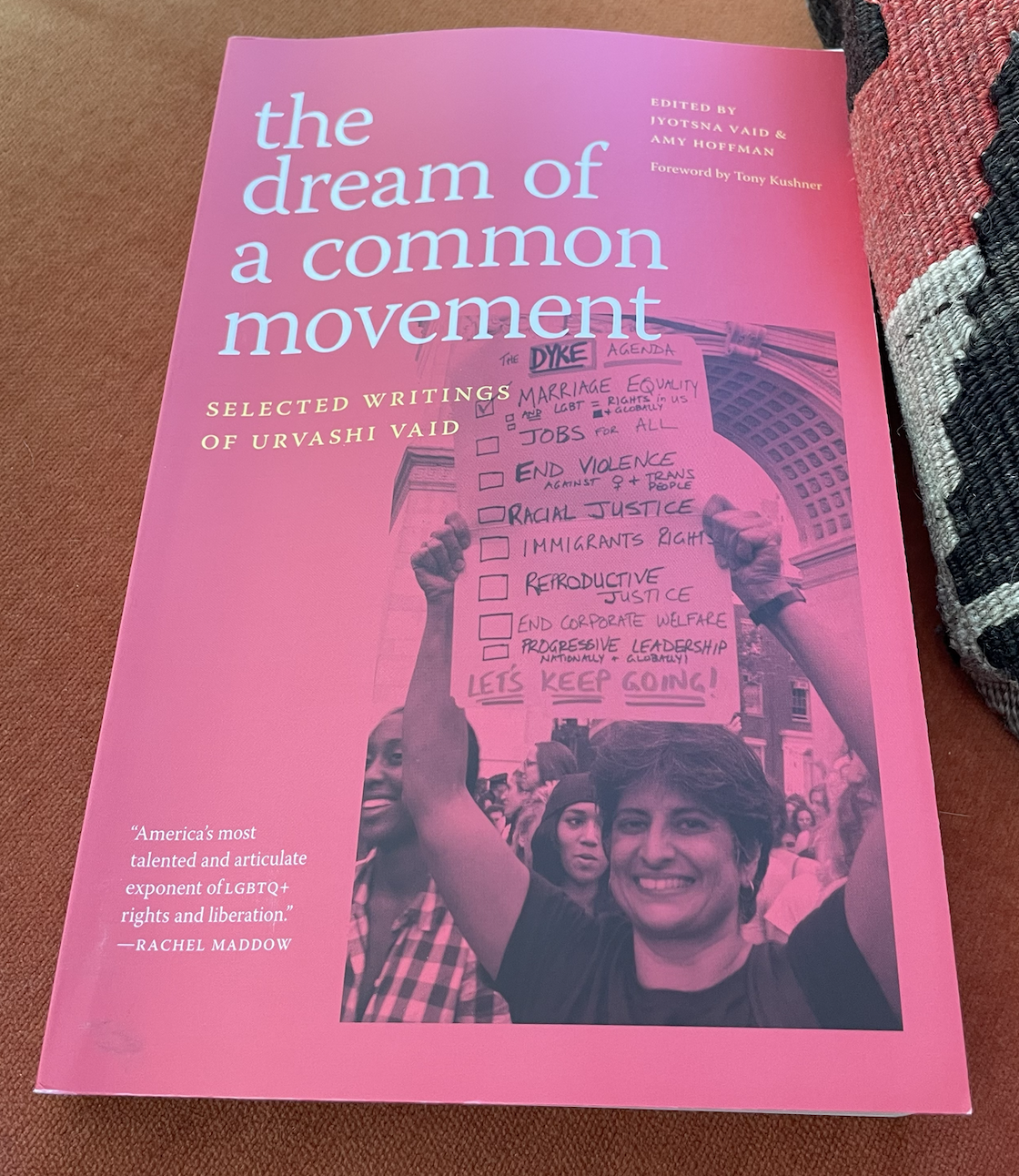
For me, Duke University Press’s publication of the selected writings of Urvashi Vaid in a volume titled The Dream of a Common Movement has come at just the right time. I suspect there are many of us who need this book, and Vaid’s vision, now and for other possible futures beyond authoritarianism.

Yard work in Kevin Adonis Browne’s A Sense of Arrival
Browne’s portrait and query create a verbal and visual direct address to a reader whose arrival Browne can only sense, leaving open the possibility—inevitability—of future encounters.

Multimodal Derek Jarman
My title “Multimodal Derek Jarman” foregrounds Jarman’s diverse, multimodal practices of art and politics, which I have immersed myself in over the past month. It also intentionally echoes the phrase “Queer Derek Jarman” used on a banner announcing an exhibition of his work at the Manchester City Art Gallery (now Manchester City Gallery) in 1992.

The Politics and Poetics of Citation
One question Glück explores in About Ed is how to write aboutness—a quality that combines nearness with a certain imprecision.

Bob and Ed’s Tomb
One question Glück explores in About Ed is how to write aboutness—a quality that combines nearness with a certain imprecision.

“Probably Filmic” - Ali Smith’s There but for the
Our capacity (or not) for empathy is central to all of Ali Smith’s work.

Drawing en Abyme
I describe drawing en abyme as a method-image for thinking about how graphic narratives stage identity as a process of becoming through drawing.


Illness Politics as a Practice of Love
The portraits here are deeply moving. Thrasher has a way of capturing community activists in action by providing touching details about their character and work along with careful analysis of the structural violence they are up against.
